Walk into any fencing competition warm-up area, two hours before the bouts start, and look around. Some of the fencers are wearing hats. Snapbacks, beanies, the occasional bucket hat. Not because the lighting is bad – though it usually is – but because a fencing hat is the daily piece. The thing you reach for at 6am before the drive to the venue, the thing you forget you’re wearing until someone asks where you got it.
A fencing hat isn’t equipment. It’s not regulated by the FIE. There’s no required design, no approved material, no rulebook for headwear off the piste. Which is exactly why it became the most-worn piece of fencing-adjacent clothing in the sport. Every fencer has one. Most have three. This is the guide for picking yours.
The Cap, the Hat, and the Beanie - What Fencers Actually Wear
The fencing hat comes in three forms, and the names depend on where you grew up. Americans say cap. Brits and most of the international circuit say hat. Either word works – they refer to the same daily piece.
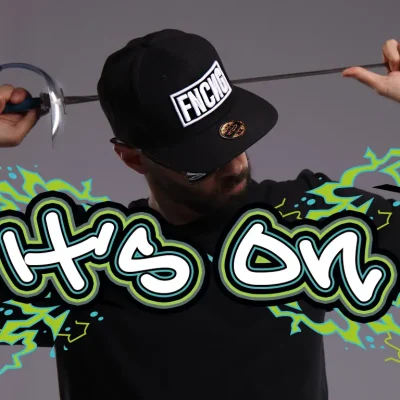
The snapback cap is the year-round default. Adjustable fit at the back, flat or curved brim, structured front panel that holds the design sharp. It’s the hat you wear to the salle in the morning and the airport in the afternoon. Most FNCNG hats fall in this category, because it’s what fencers actually pull on.
The beanie is the winter answer. Cuffed, soft-knit, sits tight on the head without flattening the hair. December competitions, January training, the cold walk home from evening practice – this is when the beanie comes out. Black is the safest pick. Black with subtle branding is the FNCNG default.
The bucket hat exists in the fencing community too, but it’s a smaller scene – usually the European junior crowd, summer outdoor camps, the festival-adjacent fencers. Not a daily piece for most.
Why a Fencing Hat Matters Off the Piste
Fencing is a sport where the on-piste uniform is white and standardised. The mask, the jacket, the lamé – every fencer at the same level looks roughly the same in competition. Which means the identity moves off the piste.
A fencing hat is where the fencer becomes a person again. After the bout, after the mask comes off, after the salle door closes behind you – the hat goes on. It signals the sport without shouting it. The right hat tells other fencers in the airport that you’re one of them, and tells everyone else that you have a sport. Both messages are useful.
For traveling fencers – and competitive fencing is a traveling sport – the hat does another job: it covers the salle hair. Fencing hair is a particular kind of mess. Damp, sweaty, flattened by the mask, then air-dried in the warm-up area. The hat is the cover-up that gets you from the venue to the hotel without looking like you just left a sauna. Every fencer learns this trick by the second competition season.
What to Look For in a Fencing Hat
A fencing hat isn’t complicated, but the wrong one becomes obvious fast. Here’s what matters.
- Fabric: Cotton or cotton blend, structured. Avoid pure polyester – it doesn’t breathe, and a fencer’s head sweats more than most. The classic snapback construction (cotton front panel, mesh or cotton back) is the proven one. For beanies, look for a soft acrylic or wool blend with a cuffed band that holds shape.
- Fit: Adjustable snapbacks are forgiving – one size fits most. But the adjustment band matters: plastic snap closures are the standard, and they should sit flat against the back of the head, not dig in. For fixed-size caps and beanies, true-to-streetwear sizing is the rule. If you’re between sizes, go up.
- Design: This is where most fencing-themed hats fail. Generic crossed-swords logos, novelty text like “Touché!” in Comic Sans, fan-shop souvenirs – none of these get worn after the first photo. The hat that actually gets worn has design that reads as streetwear to outsiders and as fencing to insiders. Subtle text, sharp graphics, restrained colour palette. FNCNG hats are built on this principle.
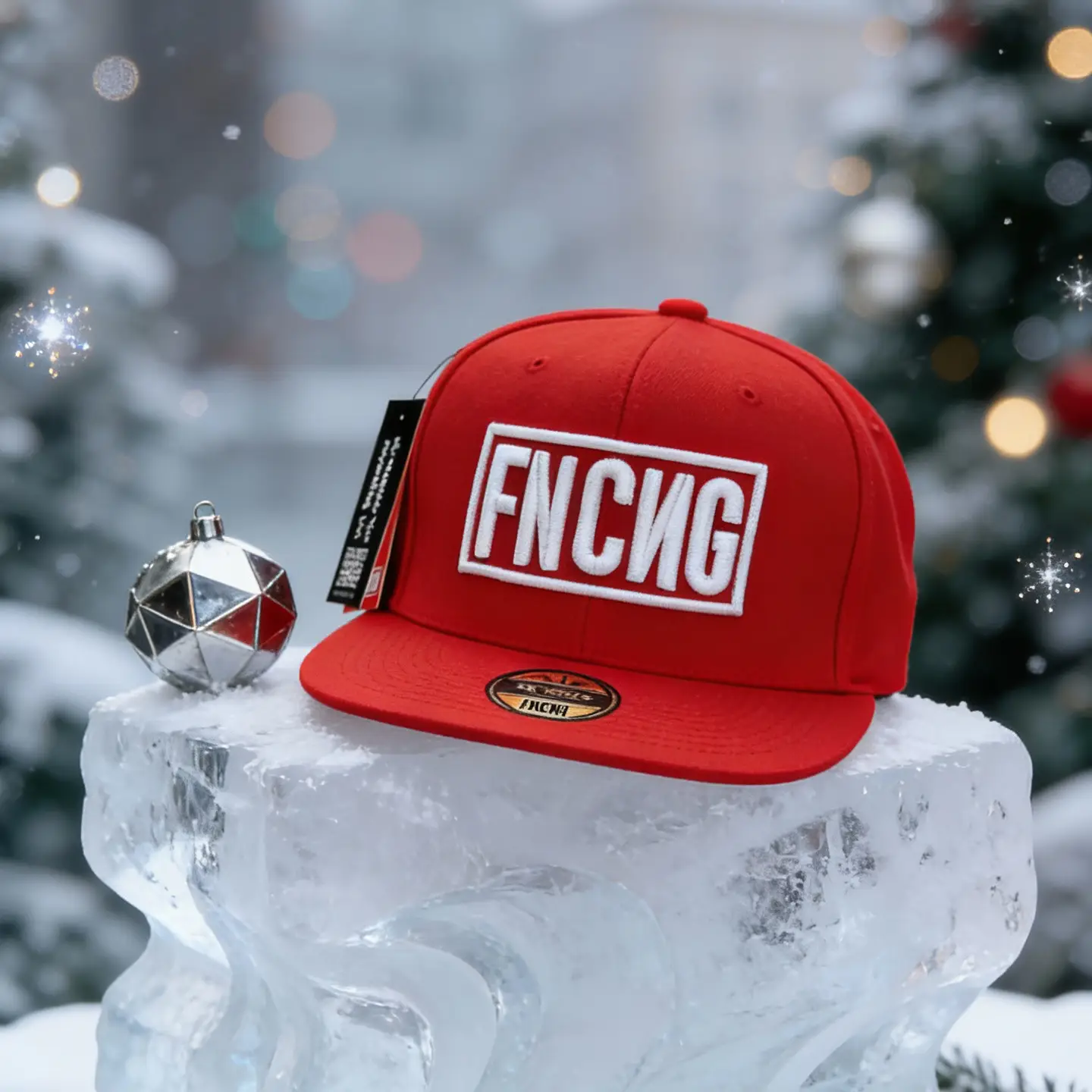
- Colour: Black is the universal default – works with any outfit, hides wear, looks sharp at every venue. Red is the bold pick – signals confidence, photographs well, harder to lose at competitions. White exists too but stains fast at fencing venues.
- Branding: Heavy logos read as merchandise. Restrained branding reads as a designed piece. The fencing hat that gets the most compliments is usually the one that doesn’t shout the brand name.
The FNCNG Hat Collection
FNCNG makes three hats, each built on the principles above.
The Essential Black Fencing Cap is the daily snapback. Adjustable fit, clean FNCNG branding, designed to hold its shape past competition seasons. €25, and the one most fencers buy first.
The Essential Red Fencing Cap is the same construction, bolder colour. The pick for the fencer who wants to be seen across a venue. Same €25 price, same build quality, sharper photo presence.
The Essential Cuffed Beanie in black is the winter complement. Soft knit, cuffed band, designed for December competitions and post-training walks home. €25 again.
All three live in the fencing caps category at fncng.com. Browse the full headwear range, or read the cap descriptions for fit and material details.
For the Sabre, Foil, and Epee Fencer
Hats aren’t weapon-specific, but the style choices often track with the weapon.
Sabre fencers tend toward the bolder pick. Sabre is the fast, aggressive, loud weapon, and sabre style off the piste usually matches – the red snapback fits the personality. Sabre fencers also travel more on the international circuit, and the hat that photographs well in social media posts is the one they reach for.
Foil fencers split. The classical foil player goes black snapback, low-key, technical. The modern aggressive foil fencer goes red. Either reads correctly for the weapon.
Epee fencers run quieter. Black is the dominant pick. The cuffed beanie also works well for epee – epee tournaments are long, often run into evening sessions, and a beanie covers more hat-days than a cap.
Coaches across all three weapons tend toward black caps. The quiet authority of the head coach is matched by the lower-volume colour. A red cap on a coach reads as a former competitor, not a current strategist. Both are valid, just different signals.
The fencing hat is the smallest piece in the FNCNG range and the most-worn. It’s the gateway purchase for fencers new to the brand, the easiest gift for parents and partners, and the piece that gets reordered most often when an old one wears out.
Pick the one that fits the version of you that walks off the piste, not the one that fences on it. The fencer is already covered in white. The person under the hat is who you’re dressing.
Browse the full fencing caps and hats collection, or see the fencing gifts page for caps under €25 alongside the rest of the FNCNG range.